
PDF 第 1 页 · 仅图片索引
页眉图像块
picture_001.png查看 XML 图注
XML 未提供此图像块的独立图注;请结合原文页码阅读。
RSI-Anything: Unlocking Recursive Self-Improvement with World Models
复用已完成的真实解析结果;每张 PNG 都有 XML 索引、来源页码与文件哈希。
校验通过,边界保留。11 处正文引用关联到 8 张图片,另 9 张仅在图片索引中。13 个 picture 是导出的图像块,包含标识和分块裁切,不等于论文有 13 幅编号 Figure。此页不将索引完整性解释为语义或正文位置完全准确。
以下 PNG 从归档解析包原样复制。点击图片可查看原始尺寸;图注与页码来自同一份最终 XML。
picture_002.png · PDF 第 2 页 · XML ID docling_picture_002。这一图像块在 XML 中带有 Figure 1 图注。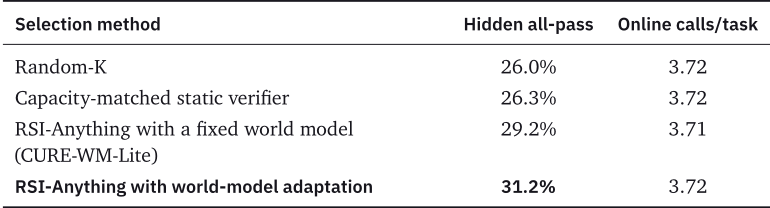
table_002.png · PDF 第 13 页 · XML ID docling_table_002。这是解析出的原表;实验协议和结论以原论文为准。17 张 PNG 全部保留。卡片中的中文名仅便于浏览;文件名、页码、XML ID 和英文图注保留解析结果。图像块可能只覆盖论文某幅图的一部分。
picture_001.pngXML 未提供此图像块的独立图注;请结合原文页码阅读。
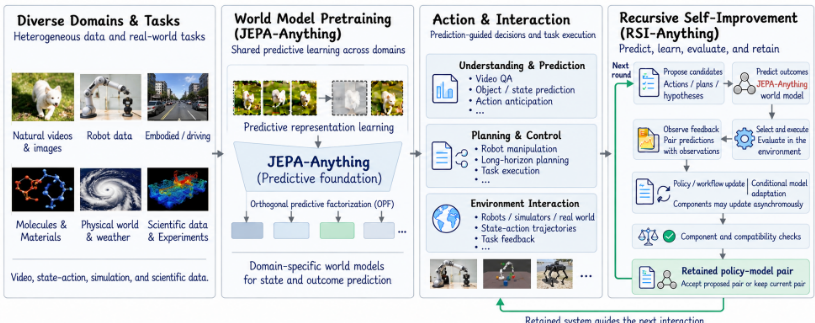
picture_002.pngFigure 1 | RSI-Anything overview. Building on the cross-domain predictive foundation of JEPA-Anything, RSI-Anything uses world-model predictions to support understanding, planning, and action selection across diverse tasks. Interaction feedback drives policy or workflow updates and conditional world-model adaptation. Component and compatibility checks determine which policy-model pair is retained to guide the next round of interaction and learning, closing the recursive self-improvement loop.
picture_003.pngXML 未提供此图像块的独立图注;请结合原文页码阅读。
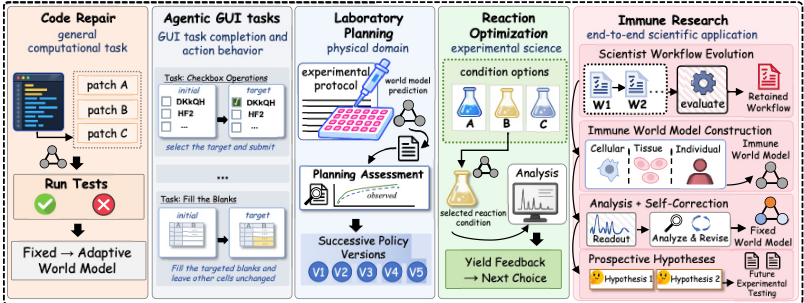
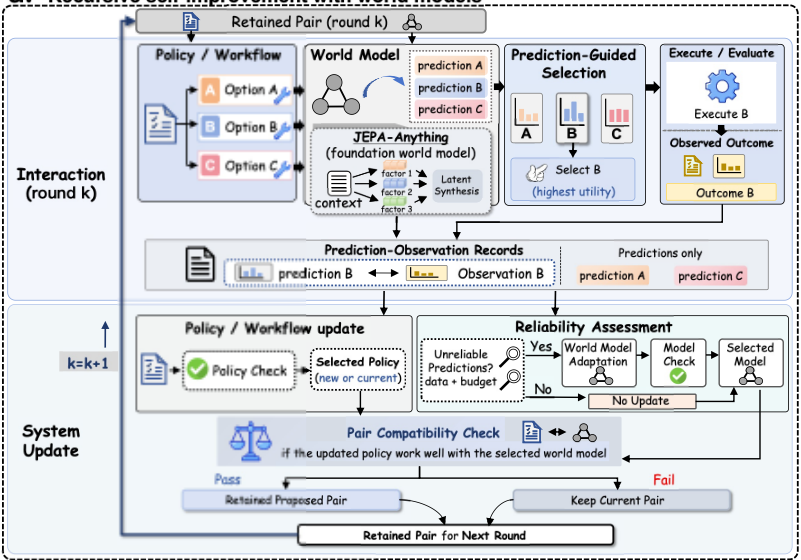
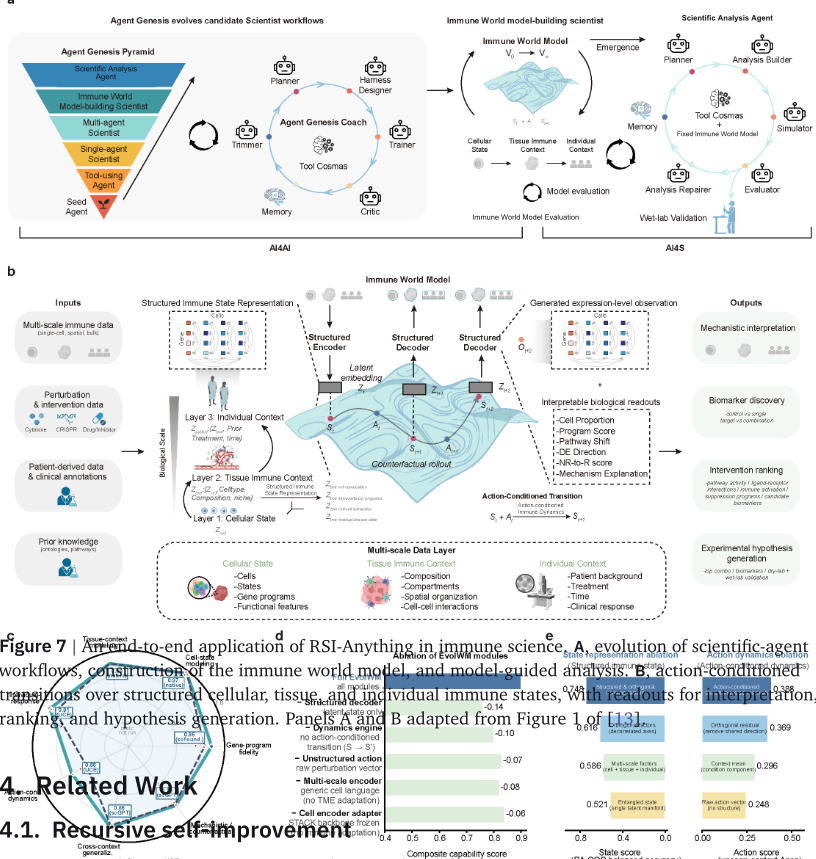
picture_004.pngFigure 2 | RSI-Anything couples prediction-guided action with retained system updates. a , Building on JEPA-Anything, world-model predictions guide candidate selection for external evaluation. Only the executed candidate (B) yields paired prediction-observation feedback. Feedback supports policy or workflow revision and reliability assessment; world-model adaptation depends on prediction reliability, available data, and budget. Component and compatibility checks determine the retained policy-model pair, which shapes candidates and learning experiences in the next round. b , The shared mechanism is instantiated in code repair, GUI interaction, laboratory planning, and reaction optimization. An end-to-end immune-science application connects workflow evolution, immune world-model construction, analysis with self-correction, and prospective hypothesis generation.
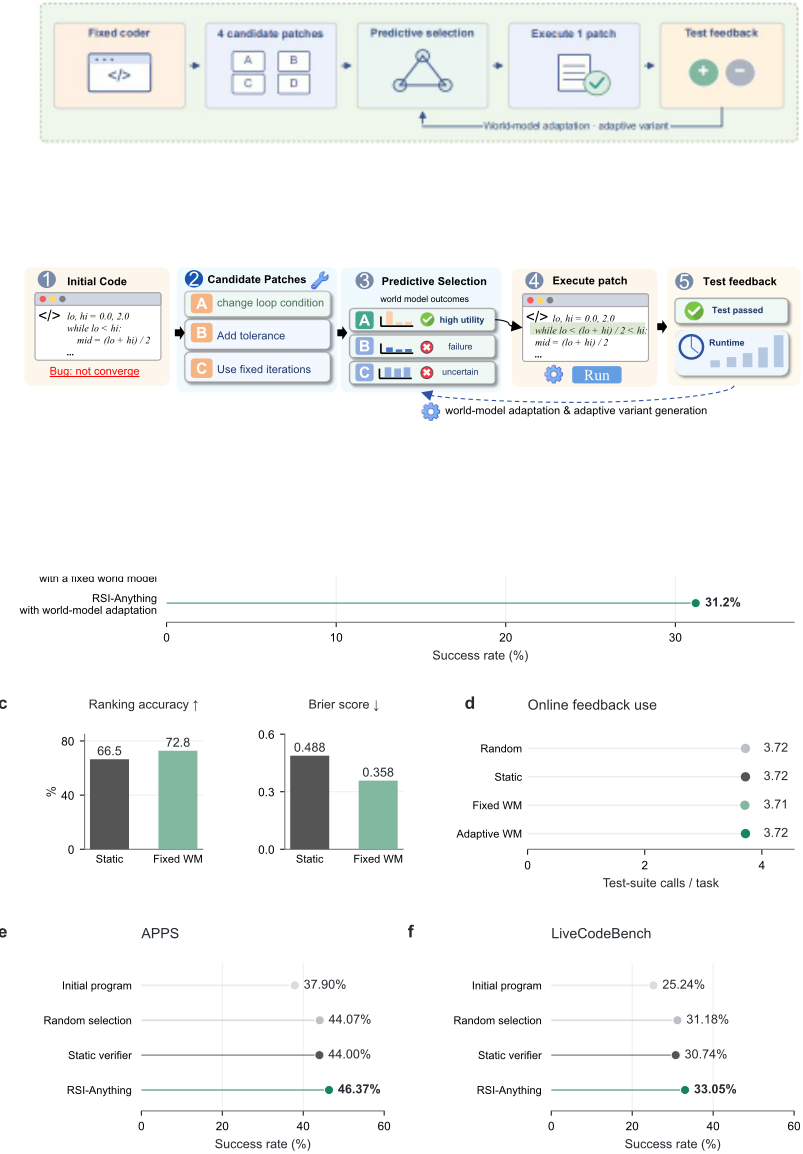
picture_005.pngFigure 3 | Prediction-guided selection and world-model adaptation in code repair. a , Illustrative repair of a non-convergent loop, from candidate patches and predicted outcomes to execution and test feedback. A-C depict example patches; the benchmark uses a fixed coder and four candidates per round. Feedback supports predictor updates in the adaptive configuration. Panels b-d report results on 200 CodeContests tasks across three seeds with up to three feedback rounds. b , Final hidden-test all-pass rate. c , Candidate-ranking accuracy and five-class Brier score for the static verifier and the fixed-world-model configuration. Higher ranking accuracy and lower Brier score indicate better predictive performance. d , Mean online test-suite calls per task. e,f , Final full-test success averaged over three seeds on APPS Introductory (1,000 problems) and LiveCodeBench v6 (1,055 problems), respectively. Fixed WM denotes RSI-Anything with a fixed world model (CURE-WM-Lite); Adaptive WM denotes RSI-Anything with world-model adaptation. Green shades identify world-model-based methods; gray shades identify baselines.
picture_006.pngXML 未提供此图像块的独立图注;请结合原文页码阅读。
picture_007.pngXML 未提供此图像块的独立图注;请结合原文页码阅读。
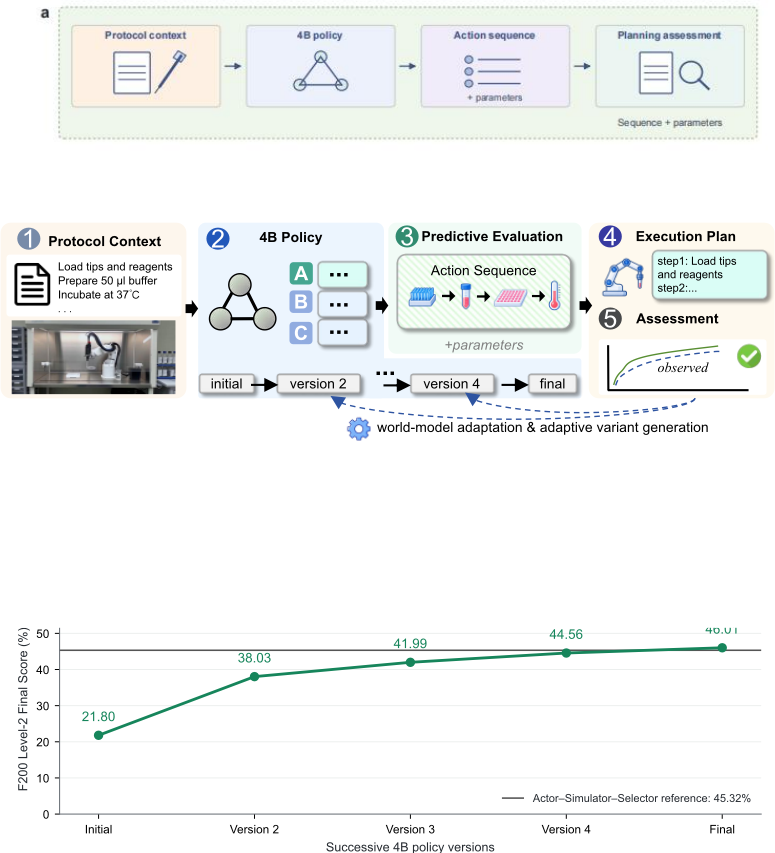
picture_008.pngFigure 5 | Successive policy improvement with RSI-Anything on the 200-task LabHorizon F200 Level-2 benchmark [22]. a , Illustrative planning workflow connecting protocol context, a 4B policy, predictive evaluation of action sequences and parameters, an execution plan, and assessment. Dashed feedback paths depict update routes in the framework; the quantitative comparison below follows retained policy versions. b , Five consecutive versions of the same 4B policy from one self-improvement process. c , Final Score for each version, combining action-sequence similarity and parameter accuracy. The dashed line marks the Actor-Simulator-Selector reference at 45 . 32%. Versions are ordered by development sequence; spacing is schematic.
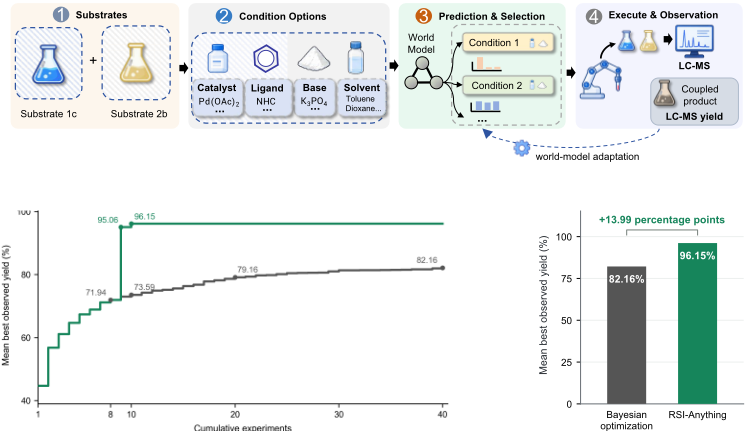
picture_009.pngReaction-condition optimization with RSI-Anything (green) and Bayesian optimization (gray). ,

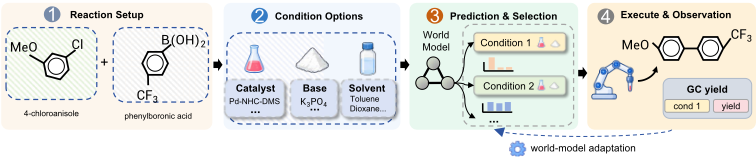
picture_010.pngFigure 6 | a Illustrative GC-screen workflow connecting the reaction setup, catalyst/base/solvent options, prediction-guided condition selection, and measured yield. The reaction couples 4-chloroanisole and 4-(trifluoromethyl)phenylboronic acid using a Pd-NHC-DMS precatalyst. b , Best observed GC yield versus cumulative experiment count. c , GC yield after 20 experiments: 93 . 0% for RSI-Anything and 87 . 5% for Bayesian optimization. d , Illustrative flow-screen workflow for substrates 1c and 2b, with Pd(OAc) 2 , ligand, base, and solvent selection followed by LC-MS analysis. e , Mean best observed yield versus cumulative experiment count in the flow LC-MS screen. f , Yield after 40 experiments: 96 . 15% and 82 . 16%, respectively. Brackets indicate gains of 5 . 5 and 13 . 99 percentage points within the corresponding screen. Condition examples and feedback arrows illustrate the framework; curves and bars report the two separate screens.
picture_011.pngXML 未提供此图像块的独立图注;请结合原文页码阅读。

picture_012.pngXML 未提供此图像块的独立图注;请结合原文页码阅读。
picture_013.pngXML 未提供此图像块的独立图注;请结合原文页码阅读。
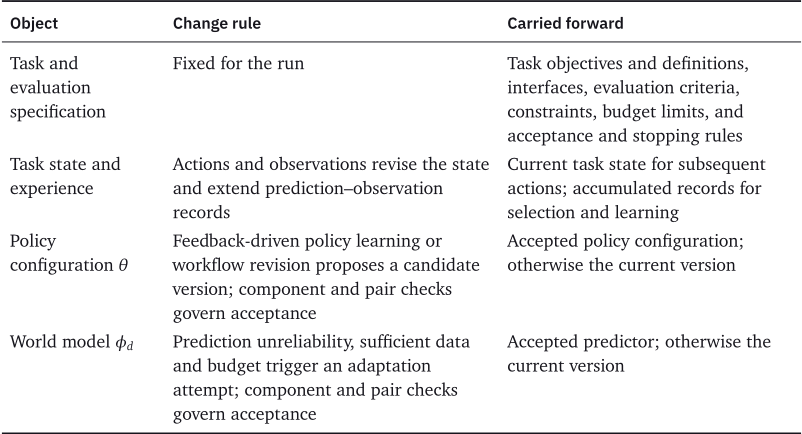
table_001.pngTable 1 | Fixed settings, update rules, and retained state in a recursive run.
table_002.pngTable 2 | Three-round repair on CodeContests [15] under a shared coder and candidate budget. Both RSI-Anything configurations use world-model-guided candidate selection: one keeps the world model fixed (CURE-WM-Lite), and the other additionally adapts it using feedback.
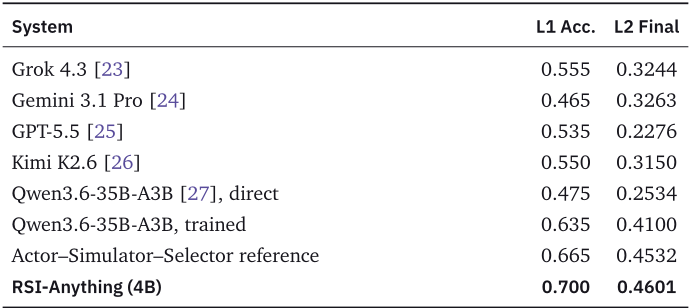
table_003.pngTable 3 | LabHorizon benchmark scores for reference systems [22] and RSI-Anything.
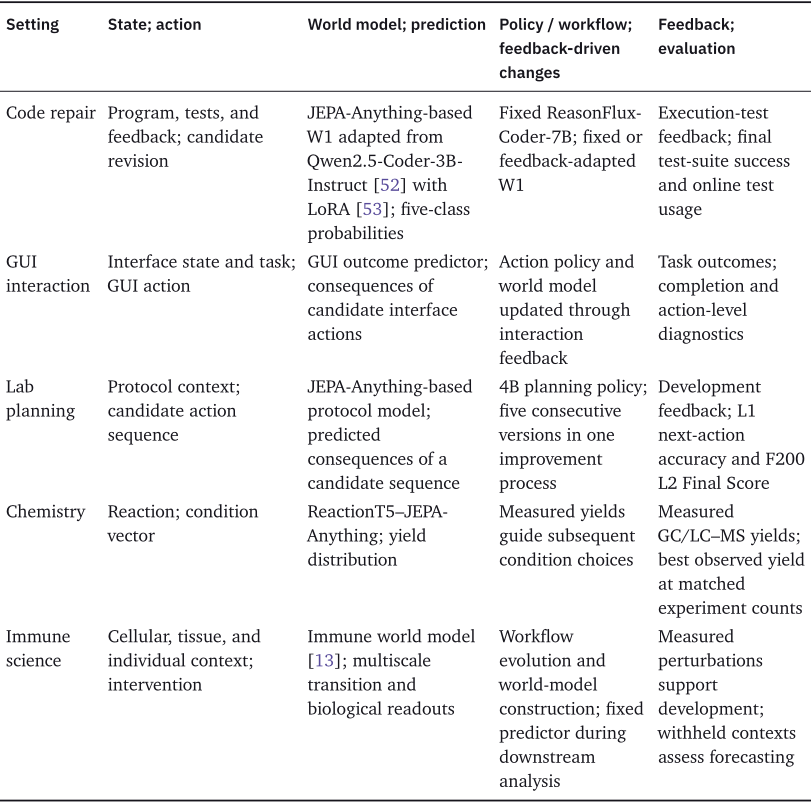
table_004.pngTable 4 | Domain bindings and reported update scope. The world model predicts consequences; the policy proposes or selects actions.
来源标识:2026-10-16 08:00(北京时间)CCN 快报本地归档 · DSH-20261013-049。该页复用已完成解析包,没有重新解析 PDF。
idno type="MD5" 一致。valid: true;残留 GROBID 图表和悬空视觉 target 均为 0;8 处原始视觉引用没有 Docling 正文关联。XML SHA-256
c0a87b5cf229a05cbea132622fcf219f7fb41052e1062723e2a7600262a9356d